Zombie movies are...flawed at times. Even the best of them have their weaknesses. I must be truly winding down the list of partial-zombie movies because these movies just keep getting worse and worse and worse. Sometimes, however they are unforgivable. Nearly every bad horror director in the last 75 years has had his say in the zombie genre and I'd go so far as to say one can judge the career of a director by the quality of his zombie movie (Vampire movies often get away with much more than other genre flicks and Mummy movies are nearly impossible to make better than average). Jesús Franco, Joe D'Amato, Danny Boyle, John Gilling, Umberto Lenzi, Ed Cahn, George A. Romero. All these men performed at their absolute best and worst while making their zombie movies and one can get a sense of exactly the kind of filmmakers they were by watching them. This principle is given fresh, terrifying life when you watch a truly risable piece of trash like The Living Ghost and are able to sum up the career of it's director in a few swear words. William Beaudine was one of the worst directors to hold a megaphone and his refusal to shoot more than one take of any scene earned him the nickname "one shot"; Now there's a legacy a man can envy. For everyone who thinks that Plan 9 is the worst movie ever made, let me point you in the direction of Billy The Kid Versus Dracula and you'll see what it looks like when a real shithead got near a camera. Beaudine's ability to crank out westerns for 7 dollars and his zenlike ability to not give a good goddamn how his movies looked places him in a vangaurd of terrible directors few will ever know. If you have any trouble with this idea check out The Living Ghost without the aid of drugs or alcohol.
The Living Ghost
by William Beaudine
This review will be short as it mostly serves to prove a point more than anything and I had a hard enough time getting through this one to linger too long over it's dead body. The Living Ghost starts with the disappearance of an eccentric millionaire and the bickering family left behind. Things go as routinely as could be expected of a rich, snotty movie family from the 40s (Like an even more unbearable version of the family from My Man Godfrey) but any hope of a decent outcome is shot to death when someone suggests seeking the help of an even more eccentric detective to help in the search. To make an unreasonably long story (for a 61 minute movie) short they discover somebody had turned the missing millionaire into a zombie the reason for which is explained in the lame conclusion. But between conflict and resolution we are treated to the most annoying fast-talking detective and naive society girl plot one could fit into such a small space. The movie feels twice it's length because of the stupid blathering, witless name-calling, and horny sub-antics of James Dunn's investigator praying on Joan Woodbury's dim rich girl (she did roughly the same thing in King Of The Zombies, another winner). In the reviews of most 40s horror films, people will tell you about the annoying appearance of the comic relief and how it detracts from the plot; In this case it seems to be the plot getting in the way of the driest, most painfully unfunny comedic dialogue screenwriter Joseph Hoffman could think to give Dunn. That Beaudine had no concern for how this movie was going to turn out and seemed content to let James Dunn chew the scenery with a knife and fork shows clearer than the fact that this movie had no hopes of being even nominally frightening. The Living Ghost is just annoying from start to finish, so much so that I wish it on my enemies.
Watching The Living Ghost will give you a more in-depth look at Beaudine's career than if you read a biography or tribute. He was and shall remain a lazy son of a bitch, the John Carradine of the camera and the sheer volume of his body of work means that there is much more evidence of his tragic career than Ed Wood, Coleman Francis, Al Adamson, & Bert I. Gordon combined. Let this serve as a warning: Don't assume you've hit rock bottom until you know you can't sink any lower, because undoubtedly people will watch Attack Of The Giant Leeches or Zombie 3 and assume things can't get any worse. It can always get worse. Also, when you get it in your head to watch all of a kind, you are undertaking something far greater (and in many cases far, FAR worse) than yourself. Rest assured, I love zombie movies, but, I can only imagine if instead of seeing Dawn of the Dead in the third grade, I'd seen Black Christmas. I'd have a much more arduous task ahead of me than I do now.
Sunday, January 6, 2008

Saturday, January 5, 2008
It All Comes Back To The Italians
This has been a big few days for me, a Naschy film followed by a Franco film followed by THE Bava film. In watching these movies I realized just how much has been impacted by cult horror in the last half-century; how films like Bay Of Blood wound up influencing the films of Michael Haneke in their grim portrayal of violence. Wierder still is the idea that the strange whims of yahoos like Jesús Franco are never going to be erased from history's long list of artistic bastardizers simply because they had cameras and people like Lina Romay and Jack Taylor who were more than happy to pretend to have sex in front of a camera. While watching Female Vampire it struck me that Franco could have made any movie he wanted to with the money and crew he had, but he chose to make Female Vampire. He clearly had no content restrictions (the first and last thing and only thing we see are Lina Romay prancing through the woods, as naked as a newborn child) and yet chose to make the most aimless movie I've yet seen. I understand this was supposed to be a softcore porn film, but this movie isn't erotic or even the least bit exciting. Each new element makes the film harder to follow and the plot is purely nominal. The question I find myself asking is, all these guys Franco, Rollin, Mattei, Naschy...They could have made any kind of movie they wanted in the horror framework but instead chose never to exert themselves beyond either filming boring smut or ripping each other off shamelessly. Clearly they had ideas (you don't make 180 films without them) so why did they always act on their most base impulses? Why not create tension or create likeable characters for once or follow any plot point to the end or really try scaring people? You are horror directors aren't you? Why stick to formulas if you really have no interest in them? European horror directors of the 70s were a bunch of truly perplexing guys. It fell to them to rewrite the standards for filth when the world was getting used to a Hays-less world and they chose the most bizarre, winding road possible. If I was on the cusp of a revolution in cinema, I don't think the thing I would want to be remembered for would be Deep Red or Female Vampire. And you know what, those guys are still praised for making the choices they did and are in part responsible for the world we live in today. I'm willing to bet if they knew how things would turn out, they wouldn't have changed a thing.
Friday, January 4, 2008
Stupid...Stupid...Stupid...
I guess it speaks to my love of filth that I was willing to try both Female Vampire and Vengeance of the Zombies without subtitles when my DVD player stopped working. And I guess it also speaks to my love of filth that while watching both of these movies I recognized early on that every little nuance in these pictures wasn’t going to amount to anything by the time the credits rolled. I could tell, for instance that when the badly scarred servant of the guru Krisna shows up, that his facial wounds were never going to be explained, though they both could have and should have been (as they would have made for a much more interesting plot point). Given the fact that I continually trick myself into watching trash with little to no payoff, I wasn’t quite sure who was more bold; Jacinto Molina, who pretends to be an Indian mystic for an half of the film and Satan himself for the other half and who during an introduction claims that Vengeance is the scariest Spanish horror film ever made, or me, who chose to call his bluff and sit through this tragicomedy. Just how big a fucking sign do I need before I stop myself from watching something?
Vengeance of The Zombies
by Leon Klimovski

 These are all admittedly stylistic deficiencies, which is to say I never mentioned the continuity errors or glaring plot inconsistencies, which are numerous, dear readers. Continuity: Man enters room with scythe, and after 9 seconds the scythe is now a pitchfork. After this clash, the two protagonists flee the scene, and then make out? The zombies seem to be at 10 places at once, but never manage to kill the protagonist. We see a man driving a car, a woman driving a bicycle and then…they crash. Everyone’s ok and they drive back to town. No one seems to be particularly bothered by this at all. My favorite piece of incompetence comes at the end. When the villain is making his last stand, there’s a groovy little jazz number playing under everything. When he is stopped the song slows down like someone is holding the record in place while his zombie slaves fall down in slow motion. Sometimes this is like a Benny Hill movie, I swear to god.
 Maybe I’m asking too much of a Spanish horror film (they haven’t had the best history), but would it be too much to ask for them not to have a Guru turn out to be both a prick and a perverted liar. I don’t know how much more insensitive Molina could have gotten. When asked about the devil-worshippers who used to inhabit his manse, Naschy’s guru replies, “foolish superstition”. Yeah, says the guy in a turban and cheap suit. Thanks for trying, Klimovsky. Oh and to add insult to insult (after insult after insult after insult) the zombies are about as lame as possible. I haven’t seen a movie this unintentionally funny since…well, this afternoon when I watched The Warriors. (Baseball uniforms and clown make-up constitutes gang colors? Puh-leaze!) Do I recommend it? Do I recommend wearing a beehive as a hat? No. No, I do not.
Vengeance of The Zombies
by Leon Klimovski
I have no problem admitting that in my search for movies that have anything to do with Zombies not made in the last ten years, I’ve done my fair share of grasping. I’ll raise myself one more and admit that the only reason I sat through this movie is because the word Zombie appears in the title in big bloody letters. Another thing I don’t mind admitting: I have no clue what the hell Jacinto Molina was thinking when he wrote this. Molina made his career with these films, writing under his own name but acting under the name Paul Naschy…cause we all know how American that sounds. Naschy was sort of like the John Belushi of Spanish horror, but he was unintentionally funny more than half the time. Let’s try something. For every plot point that doesn’t go anywhere, I’ll put a star next to it. The story: an Indian mystic is somehow behind a series of pretty lame murders performed a girl he has recently raised from the dead (legit). This living dead girl returns to haunt her closest friend and cousin Elvire (a name Molina used in at least 3 other movies), who plays right into the mystic’s hands and watches her family slowly fall victim to the mysterious murders*. She believes, because of some dreams she has while staying in his house, that she is being used by an age old clan of Satan worshippers called “Watlies” as a sacrifice to Satan himself, who actually puts in an appearance, a long with a woman painted gold stirring a giant cauldron* (???). All the while, these voodoo type murders are going on, controlled by a man in a black costume who changes masks every scene*. While Elvire falls deeper into the whole murder and Satan thing, her male friend Lawrence tries lazily to figure out the whole mess, just in time to do nothing about it. Then there’s the plot about revenge and…snore***. There’s too much going on for this film’s good and by the time anything pans out, you’ve already called a friend to do something else. The plot is made doubly confusing by the fact that the protagonist and antagonist (Satan himself, I might add) are played by the same guy…Paul Naschy. If I had to quantify how much thought went into this I’d just cut off Paul Naschy’s head with a saw.
This movie basically defines obscene; there is nudity and violence, both pointless and not particularly striking examples of their kind. It owes plenty to Let Sleeping Corpses Lie and The Night Evelyn Came Out Of The Grave. It actually resembles Lucio Fulci’s The Beyond when it comes to form. There is a scene in a morgue with a little unintentional humour in the signage. There are scenes of investigation that further serve to muddle an already muddled plot; there is a woman in trouble, an unexplained belief system, continuity errors, unintentional character traits, and a lot of make-up for make-up’s sake. Then there are the flashes of 60s style that had apparently taken its time getting to Spain; though made in 1973, it feels like a mid-60s satire and falls flat on it’s ugly face every time this stupid tendency rears its head, which is much more frequent than can be called acceptable. First of all there’s the clothing (HAVE MERCY!) which I believe come close to rivaling It’s Alive for looking the most dated of any 70’s horror film. Then there’s the religious aspect. Molina wasn’t about to ridicule Christianity with Franco still around, so instead we have the most offensive portrayal of Eastern religion I’ve seen in some time. First of all, I don’t remember the last time someone mixed Hinduism and Voodoo, but, then, this is my first Paul Naschy film. There’s the confusion of Satanism and voodoo practice, which are not the same thing (actually from this confusion comes the film’s only smart move, when Elvire dreams she is the center of a satanic ritual even though it’s revealed later the goatman in her dreams is supposed to be Baron Samedi, not Satan. This would make sense because until that point she hasn’t heard of the voodoo God at the bottom of the plot, though I have to assume this was unintentional. Incidentally, I think that's the same goatman from Molina's Inquisition, five years later). Then there’s the music. Sweet Jesus, the music. Free jazz and bad funk from reel one to reel infinity. Watching a goatman seduces redhead dream sequence with jazz music underscoring it makes me wonder if Klimovsky didn’t watch a few John Cassavettes films and then forget which ones he acted in and directed and just split the difference. There’s the continued occurrence of one special effect (the slitting of a throat), which is unconvincing to say the least, but could plausibly have been what made Molina and Klimovsky put the bong down for a minute and make a movie. Finally we have the dream sequences, which don’t make a lick of sense, but also suffer from Klimovksy constantly changing angles. At first he uses a sort of fish eye to disorient the viewer, but then changes back after the initial shock is over. To simulate just waking up, he had someone wave their hands in front of the camera rapidly instead of the traditional fogging of the lens. One of the devil masks is quite literally a cereal box with holes cut out for eyes and with a felt tongue hanging off the front. Klimovsky is in love with himself and this movie showcases that affair rather nicely. There all sorts of thought-out camera actions and shot compositions and such that would have made sense in a better film, but here just show you how ill-served he was as a director. “If I’m going to do it, it’s going to be done right.” “How about character development and a story?” “Well…I was thinking like, shots of meat hanging and stuff and, you know, like ripping off Hitchcock.”
These are all admittedly stylistic deficiencies, which is to say I never mentioned the continuity errors or glaring plot inconsistencies, which are numerous, dear readers. Continuity: Man enters room with scythe, and after 9 seconds the scythe is now a pitchfork. After this clash, the two protagonists flee the scene, and then make out? The zombies seem to be at 10 places at once, but never manage to kill the protagonist. We see a man driving a car, a woman driving a bicycle and then…they crash. Everyone’s ok and they drive back to town. No one seems to be particularly bothered by this at all. My favorite piece of incompetence comes at the end. When the villain is making his last stand, there’s a groovy little jazz number playing under everything. When he is stopped the song slows down like someone is holding the record in place while his zombie slaves fall down in slow motion. Sometimes this is like a Benny Hill movie, I swear to god. Tuesday, December 18, 2007
The Best Albums Of 2007
The Best Records Of The Year! Well, the best ones I heard. I can only really vouch 100% for the top three choices. The rest are there for the world to decide. Oh, and the reason In Rainbows is left off is because none of us has heard the whole thing and to include it would be awfully presumptuous of me, wouldn't it? Not that I doubt it will be their best yet. So, on to the records we can listen to in their entirety. I've only chosen 20, so that I know i'm not grasping at straws (I learned my lesson when I tried for 100 in 2004. Yikes).
Bloc Party - A Weekend In The City

A friend told me at the start of this year that bands were going for a bombastic, 80s, Echo & The Bunnymen type sound, using this as an example. He was absolutely right, as every one of these 20 records are big, loud, a little pretentious, and warm. Bloc Party's sophomore is a little harder edged than their debut, but it catches on just as quick. If Silent Alarm was Hammer Studios, Weekend is Tigon; with songs about Witches & Religion, the metaphor works doubly. While Weekend reaches much higher volume than Silent Alarm, it also has their first out-and-out pop tune in I Still Remember, which is needless to say a little lazier than the rest of the CD, but their new found fondness for synthesized sound works twice as hard to pick up the slack.
The New Pornographers - Challengers

Is that all? Challengers went by too quickly for my liking. It's the best record the group has ever done and they knew enough not to let it hang around long enough to disinterest listeners, a mistake they've made with their past three records. This time, pop bliss in 12 songs. Unexpected arrangements and some really interesting combinations of A.C. Newman's normal glamourous retro tunes and Dan Bejar's slow burners that make this record so fascinating. And just as you think it's time for the record to wear out it's welcome, it's finished and made you want more. They've excised all the flab and left in nothing but good things, and if the B-sides are any indication, they had plenty more in them.
Feist - The Reminder

Yeah, ok, whatever. I really think in a year's time it'll be difficult for me to recall a time when I actually respected Feist. It seems only yesterday I was silently bragging about having discovered her. All the things that most of her critics have pointed out about her are more true than ever before on The Reminder - too put-on, faux-jazzy and zealous to invite real admiration. The good things don't exactly outweigh the poor show of character she's been up to (Ipod commercial? You must be joking. At least Rogue Wave needed money for an operation.) Those aforementioned good things happen to be the first half of the album. I'm Sorry is as simple and ageless as a Shakespeare sonnet and My Moon My Man is really a gem (I'd drive to the ends of the earth for that piano sound.)
Múm - Go Go Smear The Poison Ivy

Yes, even Múm has decided to augment their sound and their band and it turned out to be an incredibly smart move. Go Go is their most pop-driven record (in that now one can say they have one that sounds like a pop record) and it may have to do with the fact that they've now got seven members pulling (and strumming) the strings. Still weird? Absolutely. Still filled with blips and scratches? Definitely! still meandering and Icelandic? Well...not so much. Direction has taken something of the mystique from this band, as has it's use of English language lyrics, but, it proves that they're trying to hang around longer than the Valtýsdóttirs, their recently departed founders. I recognize that Múm is Múm in name only, the spirit is still there, they just need to stick it out.
Peter Bjorn & John - Writer's Block
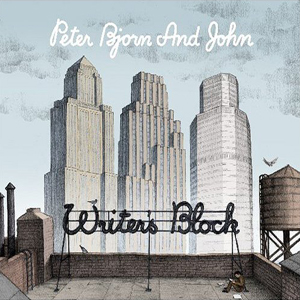
Purists will tell me that this came out in 2006 and they're right, but I didn't get my hands on a US copy until early this year, so I'm going to give them the benefit of a delayed release. Writer's Block is as simple as pop music has ever gotten and ten times as sweet as it normally gets. Peter Moren's voice begs for love to come true and his guitar drips out after it. The Object Of My Affections, Paris 2004, Roll The Credits, Start To Melt are all pitch-perfect pop tunes, and their extended lengths really help them stay in the brain.
Handsome Furs - Plague Park

I wish that I'd been the first to compare this to early Cure, but Britt Daniel from Spoon did it first. Mood aside, Handsome Furs' debut is minimalist and seething, swaggering almost as drunkenly as Dan Boeckner's Wolf Parade co-conspriator Spencer Krug's effort this year (more on this later). His guitar and lyrics let the world know exactly what it is he brings to Wolf Parade, and his contributions are evidently invaluable. He and his bride Alexei Perry combine programmed drums, a touch of synth and Boeckner's unmistakable tones to become something akin to Canada's White Stripes.
Yeah Yeah Yeahs - Is Is

Show Your Bones may have been the biggest letdown of 2006. Karen O and company decided to make a cock rock album and boy did it make me furious. How did they go about redeeming themselves? Making a killer EP with five songs crossing Siouxsie & The Banshees, Early Pretenders, Depeche Mode and all the glam-goth you can find. Karen O is up to her old tricks again and Nick Zinner has found an uglier guitar tone than Jack White, even, adding synth (like everyone else in the game) to set the scene and then stomping about with his recovered sleaze. This is a band at the top of it's game. Why is it so low on the list? Cause I want more dammit!
Animal Collective - Strawberry Jam

One of these days I'm going to have recommend my friend Meghan O'Donnell for a job discovering musical acts. Icy Demons, Architecture in Helsinki, Modest Mouse, all of them blew up months after she's explained everything good about them to me before music critics could pretend they thought of it first. Animal Collective is one such band. Meg knew that they were unlike anyone else, and here they've done what Meg knew they were capable of: the best and brightest music in their career, spun in a way unlike any other band in the business. Shouting, electronics, poly-rhythms, all present and accounted for and it's beautiful.
Broken Social Scene Presents Kevin Drew - Spirit If...

Granted this is more Shoegazer than Post-rock, but what kind of indie rock hound would I be to discount any Broken Social Scene related output in a year-end summation. I could do without all the DInosaur Jr. that makes its way onto Drew's record, but he's been star-struck ever since the Verizon festival and I suppose if I ever met Kevin Drew, i'd sure as shit make an album that sounded like BSS. What he does here is augment the BSS sound by making it full and melodious in ways the band hasn't been able to yet. The magic of Broken Social Scene is all the influences making a record that works in spite of itself. With Drew at the helm completely, it's one long experiment in pop sounds rising from static, and with help from Do Make Say Think members Charles Spearin and Ohad Benchetrit doing their share, the record works 99% of the time.
LCD Soundsystem - Sound Of Silver
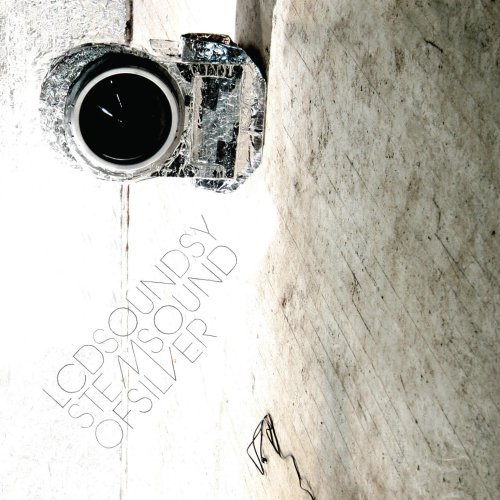
The reason I don't put this higher on my list is because James Murphy seems to have saved all the high energy for their live shows and left his record a little wanting of that crazy-guy shtick he's gotten down to a science. It's kooky alright, but it stays grounded, which I wasn't expecting after his debut, which gave enough evidence that he was going to go all out next time. What does work here is the return to the routes of dance music, the old percussion sounds, the tremendous use of ancient synth, Murphy's signature falsetto, the picked bass, like the bastard son of Marshall Grant's fingers. These guys are tight, but they need some volume and a little more fight next time around. I know they've got it in them because the best song on the album (All My Friends) is the perfect example of letting their feet leave the ground. Instrument upon Instrument is added and Murphy screams and screams in vein about how he will never be young again, but he doesn't seem to realize he's creating a lasting testament to his many years with this song.
The Most Serene Republic - Populations

Just as I was sure I'd found the best Canadian collective album in Spirit If... This found it's way to my ears. It doesn't quite have the personality Broken Social Scene does, but they use static and all 7 of its members to the greatest of efficiency. The melodies and songs are noticeably different from their peers (at least to the disciplined ear) and sound alternately cold and distant at the right moments. The sound is varied and endlessly intriguing. Listening to the songs meld together is something that makes every scene much more pleasant.
Do Make Say Think - You, You're A History In Rust

Just how much do I love Canadians. Well, 9/20 of the albums here were made by them and probably aren't nearly as good as I make them out to be. Do Make Say Think really are as good as all this however. Before History, they'd made records I enjoy, but none have been so acerbically ingenious as this one. Their instrumental compositions range from boisterous post-rock to stripped down rovers and each stop is as unique and lovable as the next. These boys know have the feel of a band that know each other like they do every inch of their instruments. They've honed their craft into something dangerously self-aware and have put their contemporaries in a tough spot. How can Silver Mt. Zion or Explosions in the Sky possibly keep up with a band that keeps evolving in new directions?
Rogue Wave - Asleep At Heaven's Gate

Descended Like Vultures, Rogue Wave's second CD was really beautiful and was for the most part the work of principle songwriter Zach Rogue. Asleep is another matter entirely. How does a band prove they are more than one man's songs? They get loud. The first song, Harmonium is a pretty stellar example of full-band Rogue Wave at it's best. Drums like the pistons of a train, guitar that shimmers and screams in turn, bass that fits around the whole mess like a pair of velvet gloves, endless Piano guiding the song along. Critics hate this record which has led me to call this their Porcupine, a record brimming with new sounds and directions that will entertain for years to come but will never be given the credit it deserves.
The Nels Cline Singers - Draw Breath
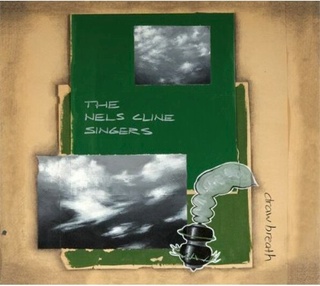
Nels Cline picked something up playing with Thurston Moore and Wilco all these years. Namely, how to make the most ballsy Jazz records in 30 years. I'd say he's the best guitar player in the world but I've never witnessed a duel between him and Omar Rodriguez-Lopez, one that I'm sure would end in fire and destruction should it ever be undertaken. This is a record that shifts between gorgeous twelve-string compositions accompanied by Contrabass and perfect percussion, to rockers driven by Cline's athletic fingering, to the all-out chaos he's made a name for himself with. This is a record that starts and ends on notes of lightness and sensitivity, but the middle is one of destruction, noise and brilliance. Which works better? I'll let you decide.
Dungen - Tio Bitar

As testament to this album's staying power, I think i've only listened to it once or twice all the way through, but I'll put it next to any rock album this year with confidence it'll psych them all into oblivion. The Swede's know how to rock out and this time they do a little more as a full band than just Gustav Ejstes pet project. Of course, Ejstses still does the lion's share of the work, but they sound much tighter here and the irony is that they are actually louder and rambunctious than ever before.
Sunset Rubdown - Random Spirit Lover

Spencer Krug is unlike any other songwriter in his game. Random Spirit Lover is like the score to a movie that was too bizarre and expensive to have ever been made - one with pirates, jungle cats, swashbuckling and the end of the world. His songs change as many as three times before the finish and make use of Jordan Robson-Cramer's guitar, the technique and sound of which i can only liken to some kind of serpent made of fire, not a bad description of Sunset Rubdown, come to think of it. Krug's endearing screams and keyboard-driven song-writing would make a decent foundation for any band, but as he's found a band that knows how to turn strange songs into untouchable genius.
Iron & Wine - The Shepherd's Dog

If anyone's looking for the definition of maturity, listen to The Sea & The Rhythm and then The Shepherd's Dog. Sam Beam isn't as depressed as he sounds. We all knew he could write the best songs one man can write, but, did anyone expect him to keep the magic with a full band? I was a little nervous when I heard Boy With A Coin, but he put all those worries to bed with Pagan Angel & The Borrowed Car, a song that makes use of every instrument present in as unpretentious a way as possible. I give Sam Beam permission to jump genres as he pleases as he's gone from one kind of bluesman to another with near-perfect results.
Apostle Of Hustle - The National Anthem Of Nowhere

Andrew Whiteman is probably the most underrated musician in Canada. No one has ever mentioned his virtuosic guitar playing as one of the gears that turns the Broken Social Machine or his fondness for Latin arrangements or his remarkable sense of composition. Whiteman's solo project has been all but ignored this year and it's a crime, as it's the big guitar record i've been waiting for. Whiteman and bassist Julian Brown trade monumental riffs over the icy fire of each song; they somehow recall both Summer and high Autumn. The music moves about like the body of a dancer and is equally as elegant and unpredictable.
Sondre Lerche - Phantom Punch

Sondre Lerche is brilliant; this record goes from Jazz to rock effortlessly and he did it a matter of months after his last record, which was one of complex arrangements and playing. How does he follow up his tribute to Elvis Costello, Burt Baccarach and Cole Porter? He pays tribute to Gang Of Four. This record rocks hard whenver it wants to, but never loses Lerche's nice-guy humane touch, never leaves the ground or reverts to screaming. No, the only screaming done here is by Kato Ådland's guitar and it sounds like it's been dying to break out these licks. Sondre Lerche is an entertainer on the level of his hero Elvis Costello and can balance hard and soft better than Elvis ever learned how to. Absolutely Sensational.
Arcade Fire - Neon Bible

I don't know if they're afraid of sounding predictable or if they are just unenlightened, but Rolling Stone, Spin, Paste and every other music rag has FAILED to notice what this is. Neon Bible is the greatest album made during my lifetime and when men twice my age concur, I can't help but reinforce this point. This is the album that every indie band in the world has been trying to make, but has so far fallen short of. Their music is as organic as possible; the song-writing team are lovers, their band can and frequently do play anything, their talents are all utilized perfectly. On Funeral, it was clear that some songs were weaker than others, however, here, there is no weak spot. It is an unrelentingly powerful work that has the same fire and passion that Mozart, Rachmaninov & Brahms work all brimmed with, except their work doesn't take so long to come to the point. This is honest music that will be as good at the end of the world as it is now. If you claim not to like this album or claim that someone has written a better record this year, you are either very foolish, a republican or very possibly the devil himself. This is music, and it may never get better than these 11 songs in a row. I've tried in vein to pick a favorite, but everyone is as glorious as the next. I have to believe it's some kind of ruse or dare when magazines choose The Boxer by The National or New Wave by Against Me as the best record this year. There is no question or competition. When Funeral, the Arcade Fire's debut came out at the tail end of 2004, it took only one listen for it to be the best record of that year. There second record was more or less destined to be the most powerful, divine work of modern music and the planets aligned and the Arcade Fire gave birth to the most urgent, criminally beautiful album they could have given. Why am I so insistent that this is the best record of all time? Someone's got to be and if the media is too fucking obtuse not to notice what this is, an unrivaled masterwork, than at least I won't be accused of rehashing old ideas. I've seen them live twice now and I've never felt more like I was part of some kind of religious experience.
Bloc Party - A Weekend In The City
A friend told me at the start of this year that bands were going for a bombastic, 80s, Echo & The Bunnymen type sound, using this as an example. He was absolutely right, as every one of these 20 records are big, loud, a little pretentious, and warm. Bloc Party's sophomore is a little harder edged than their debut, but it catches on just as quick. If Silent Alarm was Hammer Studios, Weekend is Tigon; with songs about Witches & Religion, the metaphor works doubly. While Weekend reaches much higher volume than Silent Alarm, it also has their first out-and-out pop tune in I Still Remember, which is needless to say a little lazier than the rest of the CD, but their new found fondness for synthesized sound works twice as hard to pick up the slack.
The New Pornographers - Challengers
Is that all? Challengers went by too quickly for my liking. It's the best record the group has ever done and they knew enough not to let it hang around long enough to disinterest listeners, a mistake they've made with their past three records. This time, pop bliss in 12 songs. Unexpected arrangements and some really interesting combinations of A.C. Newman's normal glamourous retro tunes and Dan Bejar's slow burners that make this record so fascinating. And just as you think it's time for the record to wear out it's welcome, it's finished and made you want more. They've excised all the flab and left in nothing but good things, and if the B-sides are any indication, they had plenty more in them.
Feist - The Reminder
Yeah, ok, whatever. I really think in a year's time it'll be difficult for me to recall a time when I actually respected Feist. It seems only yesterday I was silently bragging about having discovered her. All the things that most of her critics have pointed out about her are more true than ever before on The Reminder - too put-on, faux-jazzy and zealous to invite real admiration. The good things don't exactly outweigh the poor show of character she's been up to (Ipod commercial? You must be joking. At least Rogue Wave needed money for an operation.) Those aforementioned good things happen to be the first half of the album. I'm Sorry is as simple and ageless as a Shakespeare sonnet and My Moon My Man is really a gem (I'd drive to the ends of the earth for that piano sound.)
Múm - Go Go Smear The Poison Ivy
Yes, even Múm has decided to augment their sound and their band and it turned out to be an incredibly smart move. Go Go is their most pop-driven record (in that now one can say they have one that sounds like a pop record) and it may have to do with the fact that they've now got seven members pulling (and strumming) the strings. Still weird? Absolutely. Still filled with blips and scratches? Definitely! still meandering and Icelandic? Well...not so much. Direction has taken something of the mystique from this band, as has it's use of English language lyrics, but, it proves that they're trying to hang around longer than the Valtýsdóttirs, their recently departed founders. I recognize that Múm is Múm in name only, the spirit is still there, they just need to stick it out.
Peter Bjorn & John - Writer's Block
Purists will tell me that this came out in 2006 and they're right, but I didn't get my hands on a US copy until early this year, so I'm going to give them the benefit of a delayed release. Writer's Block is as simple as pop music has ever gotten and ten times as sweet as it normally gets. Peter Moren's voice begs for love to come true and his guitar drips out after it. The Object Of My Affections, Paris 2004, Roll The Credits, Start To Melt are all pitch-perfect pop tunes, and their extended lengths really help them stay in the brain.
Handsome Furs - Plague Park
I wish that I'd been the first to compare this to early Cure, but Britt Daniel from Spoon did it first. Mood aside, Handsome Furs' debut is minimalist and seething, swaggering almost as drunkenly as Dan Boeckner's Wolf Parade co-conspriator Spencer Krug's effort this year (more on this later). His guitar and lyrics let the world know exactly what it is he brings to Wolf Parade, and his contributions are evidently invaluable. He and his bride Alexei Perry combine programmed drums, a touch of synth and Boeckner's unmistakable tones to become something akin to Canada's White Stripes.
Yeah Yeah Yeahs - Is Is
Show Your Bones may have been the biggest letdown of 2006. Karen O and company decided to make a cock rock album and boy did it make me furious. How did they go about redeeming themselves? Making a killer EP with five songs crossing Siouxsie & The Banshees, Early Pretenders, Depeche Mode and all the glam-goth you can find. Karen O is up to her old tricks again and Nick Zinner has found an uglier guitar tone than Jack White, even, adding synth (like everyone else in the game) to set the scene and then stomping about with his recovered sleaze. This is a band at the top of it's game. Why is it so low on the list? Cause I want more dammit!
Animal Collective - Strawberry Jam
One of these days I'm going to have recommend my friend Meghan O'Donnell for a job discovering musical acts. Icy Demons, Architecture in Helsinki, Modest Mouse, all of them blew up months after she's explained everything good about them to me before music critics could pretend they thought of it first. Animal Collective is one such band. Meg knew that they were unlike anyone else, and here they've done what Meg knew they were capable of: the best and brightest music in their career, spun in a way unlike any other band in the business. Shouting, electronics, poly-rhythms, all present and accounted for and it's beautiful.
Broken Social Scene Presents Kevin Drew - Spirit If...
Granted this is more Shoegazer than Post-rock, but what kind of indie rock hound would I be to discount any Broken Social Scene related output in a year-end summation. I could do without all the DInosaur Jr. that makes its way onto Drew's record, but he's been star-struck ever since the Verizon festival and I suppose if I ever met Kevin Drew, i'd sure as shit make an album that sounded like BSS. What he does here is augment the BSS sound by making it full and melodious in ways the band hasn't been able to yet. The magic of Broken Social Scene is all the influences making a record that works in spite of itself. With Drew at the helm completely, it's one long experiment in pop sounds rising from static, and with help from Do Make Say Think members Charles Spearin and Ohad Benchetrit doing their share, the record works 99% of the time.
LCD Soundsystem - Sound Of Silver
The reason I don't put this higher on my list is because James Murphy seems to have saved all the high energy for their live shows and left his record a little wanting of that crazy-guy shtick he's gotten down to a science. It's kooky alright, but it stays grounded, which I wasn't expecting after his debut, which gave enough evidence that he was going to go all out next time. What does work here is the return to the routes of dance music, the old percussion sounds, the tremendous use of ancient synth, Murphy's signature falsetto, the picked bass, like the bastard son of Marshall Grant's fingers. These guys are tight, but they need some volume and a little more fight next time around. I know they've got it in them because the best song on the album (All My Friends) is the perfect example of letting their feet leave the ground. Instrument upon Instrument is added and Murphy screams and screams in vein about how he will never be young again, but he doesn't seem to realize he's creating a lasting testament to his many years with this song.
The Most Serene Republic - Populations
Just as I was sure I'd found the best Canadian collective album in Spirit If... This found it's way to my ears. It doesn't quite have the personality Broken Social Scene does, but they use static and all 7 of its members to the greatest of efficiency. The melodies and songs are noticeably different from their peers (at least to the disciplined ear) and sound alternately cold and distant at the right moments. The sound is varied and endlessly intriguing. Listening to the songs meld together is something that makes every scene much more pleasant.
Do Make Say Think - You, You're A History In Rust
Just how much do I love Canadians. Well, 9/20 of the albums here were made by them and probably aren't nearly as good as I make them out to be. Do Make Say Think really are as good as all this however. Before History, they'd made records I enjoy, but none have been so acerbically ingenious as this one. Their instrumental compositions range from boisterous post-rock to stripped down rovers and each stop is as unique and lovable as the next. These boys know have the feel of a band that know each other like they do every inch of their instruments. They've honed their craft into something dangerously self-aware and have put their contemporaries in a tough spot. How can Silver Mt. Zion or Explosions in the Sky possibly keep up with a band that keeps evolving in new directions?
Rogue Wave - Asleep At Heaven's Gate
Descended Like Vultures, Rogue Wave's second CD was really beautiful and was for the most part the work of principle songwriter Zach Rogue. Asleep is another matter entirely. How does a band prove they are more than one man's songs? They get loud. The first song, Harmonium is a pretty stellar example of full-band Rogue Wave at it's best. Drums like the pistons of a train, guitar that shimmers and screams in turn, bass that fits around the whole mess like a pair of velvet gloves, endless Piano guiding the song along. Critics hate this record which has led me to call this their Porcupine, a record brimming with new sounds and directions that will entertain for years to come but will never be given the credit it deserves.
The Nels Cline Singers - Draw Breath
Nels Cline picked something up playing with Thurston Moore and Wilco all these years. Namely, how to make the most ballsy Jazz records in 30 years. I'd say he's the best guitar player in the world but I've never witnessed a duel between him and Omar Rodriguez-Lopez, one that I'm sure would end in fire and destruction should it ever be undertaken. This is a record that shifts between gorgeous twelve-string compositions accompanied by Contrabass and perfect percussion, to rockers driven by Cline's athletic fingering, to the all-out chaos he's made a name for himself with. This is a record that starts and ends on notes of lightness and sensitivity, but the middle is one of destruction, noise and brilliance. Which works better? I'll let you decide.
Dungen - Tio Bitar
As testament to this album's staying power, I think i've only listened to it once or twice all the way through, but I'll put it next to any rock album this year with confidence it'll psych them all into oblivion. The Swede's know how to rock out and this time they do a little more as a full band than just Gustav Ejstes pet project. Of course, Ejstses still does the lion's share of the work, but they sound much tighter here and the irony is that they are actually louder and rambunctious than ever before.
Sunset Rubdown - Random Spirit Lover
Spencer Krug is unlike any other songwriter in his game. Random Spirit Lover is like the score to a movie that was too bizarre and expensive to have ever been made - one with pirates, jungle cats, swashbuckling and the end of the world. His songs change as many as three times before the finish and make use of Jordan Robson-Cramer's guitar, the technique and sound of which i can only liken to some kind of serpent made of fire, not a bad description of Sunset Rubdown, come to think of it. Krug's endearing screams and keyboard-driven song-writing would make a decent foundation for any band, but as he's found a band that knows how to turn strange songs into untouchable genius.
Iron & Wine - The Shepherd's Dog
If anyone's looking for the definition of maturity, listen to The Sea & The Rhythm and then The Shepherd's Dog. Sam Beam isn't as depressed as he sounds. We all knew he could write the best songs one man can write, but, did anyone expect him to keep the magic with a full band? I was a little nervous when I heard Boy With A Coin, but he put all those worries to bed with Pagan Angel & The Borrowed Car, a song that makes use of every instrument present in as unpretentious a way as possible. I give Sam Beam permission to jump genres as he pleases as he's gone from one kind of bluesman to another with near-perfect results.
Apostle Of Hustle - The National Anthem Of Nowhere
Andrew Whiteman is probably the most underrated musician in Canada. No one has ever mentioned his virtuosic guitar playing as one of the gears that turns the Broken Social Machine or his fondness for Latin arrangements or his remarkable sense of composition. Whiteman's solo project has been all but ignored this year and it's a crime, as it's the big guitar record i've been waiting for. Whiteman and bassist Julian Brown trade monumental riffs over the icy fire of each song; they somehow recall both Summer and high Autumn. The music moves about like the body of a dancer and is equally as elegant and unpredictable.
Sondre Lerche - Phantom Punch
Sondre Lerche is brilliant; this record goes from Jazz to rock effortlessly and he did it a matter of months after his last record, which was one of complex arrangements and playing. How does he follow up his tribute to Elvis Costello, Burt Baccarach and Cole Porter? He pays tribute to Gang Of Four. This record rocks hard whenver it wants to, but never loses Lerche's nice-guy humane touch, never leaves the ground or reverts to screaming. No, the only screaming done here is by Kato Ådland's guitar and it sounds like it's been dying to break out these licks. Sondre Lerche is an entertainer on the level of his hero Elvis Costello and can balance hard and soft better than Elvis ever learned how to. Absolutely Sensational.
Arcade Fire - Neon Bible
I don't know if they're afraid of sounding predictable or if they are just unenlightened, but Rolling Stone, Spin, Paste and every other music rag has FAILED to notice what this is. Neon Bible is the greatest album made during my lifetime and when men twice my age concur, I can't help but reinforce this point. This is the album that every indie band in the world has been trying to make, but has so far fallen short of. Their music is as organic as possible; the song-writing team are lovers, their band can and frequently do play anything, their talents are all utilized perfectly. On Funeral, it was clear that some songs were weaker than others, however, here, there is no weak spot. It is an unrelentingly powerful work that has the same fire and passion that Mozart, Rachmaninov & Brahms work all brimmed with, except their work doesn't take so long to come to the point. This is honest music that will be as good at the end of the world as it is now. If you claim not to like this album or claim that someone has written a better record this year, you are either very foolish, a republican or very possibly the devil himself. This is music, and it may never get better than these 11 songs in a row. I've tried in vein to pick a favorite, but everyone is as glorious as the next. I have to believe it's some kind of ruse or dare when magazines choose The Boxer by The National or New Wave by Against Me as the best record this year. There is no question or competition. When Funeral, the Arcade Fire's debut came out at the tail end of 2004, it took only one listen for it to be the best record of that year. There second record was more or less destined to be the most powerful, divine work of modern music and the planets aligned and the Arcade Fire gave birth to the most urgent, criminally beautiful album they could have given. Why am I so insistent that this is the best record of all time? Someone's got to be and if the media is too fucking obtuse not to notice what this is, an unrivaled masterwork, than at least I won't be accused of rehashing old ideas. I've seen them live twice now and I've never felt more like I was part of some kind of religious experience.
Monday, December 17, 2007
I Am Disappointed
First off, I Am Legend was much better than it had any right to be. Let's be honest, the odds weren't exactly in its favor: The guys who did Constantine see a much better movie and decide to dig up a Richard Matheson story to one up that movie with cartoonish special effects and Will Smith. Seriously? That sounds like a buddy picture at best. Most men buy cars when they have this kind of a mid-life crisisy, wild hair up their ass, not producers Akiva Goldsman and Erwin Stoff. They celebrated their midlife crises by making a Will Smith movie. Ok, let's start with the good.
I Am Legend
by Francis Lawrence

A lone scientist prowls New York like a chic Trader Horn. There's no one alive but him and his dog, wild animals roam the street, his house is fitted with military-grade defence mechanisms, and he keeps performing experiments in his basement on rats. What happened? And what about the pale guys that keep trying to kill him?
Will Smith here is the best he's been since Ali (granted I didn't see Hitch, but...) and I put this up there as one of his two or three best dramatic roles. He's reigned in, which really, REALLY helps him out. And it helps that he's supposed to be a little crazy. If I can buy the Fresh Prince as a scientist, then the film cannot really be called a failure. His few emotional scenes and the prologue flashbacks are very well done on Smith's part. It took some getting used to, especially because they show him interacting with manaquins before they ask him to be a concerned father. I knew that was really acting when his dog Sam runs into a dark building where he knows he's likely to encounter the vampire guys. His frantic whispers and muttering was believable and he reminded me of many, many other performances I similarly believed. It was enough to say "ok, Will Smith isn't the problem, so...what is?" How's that for a parallel universe kinda situation. So, now we move on to the bad.
Remember that dark building scene I just described, well it's really effective until they show you what it is he's so scared of. CGI, that's what!!!! The creatures here are about as lame as they come and I blame Goldsman and Stoff fully for this. In an interview they essentially admitted to seeing 28 Days Later and saying "Hey, we can do that." But they had to make theirs different enough not to get sued. What do they do? They go back to some of that Constantine magic and make what should be super frightening half-zombies and make them look like video game characters. I'm sorry, these are just pathetic. To me, if you're dealing with CG villains, it's a little like working with the undefeatable serial killer. What the hell does it matter what happens, they can do anything and so there's no tension whatsoever. What's scary about CG things climbing the face of a brownstone in a few seconds. That's not frightening, that's just silly (what's the difference between that and watching Hulk?). You had so much potential here, why couldn't you have just used people? Name one other movie that uses CG zombies! NONE! Every bad, inane, obtuse, obscene, violent, derivative zombie movie ever made has used REAL PEOPLE as their zombies. Sure they live and die by their make-up and gore effects, but goddamit that's the risk you take with a movie like this. By using CG you are being the biggest coward that a producer knows how to be. How could you possibly get a decent performance out of Will Smith and THEN drop the ball. It's irresponsible. Movies made 20 years before this have better effects. Dragonslayer, Aliens, Day Of The Dead, all of them have better effects and they managed to actually get scary once in a while.
Minor annoyance: This is a corporate production and as such had a decent amount of product placement. This is a ford movie. Mustangs, Explorers and the like are seen throughout. He also uses some big shit computer equipment for keeping records of things, which in the end get destroyed anyway. That's the other thing I don't get. The climax was almost as defeatist as the decision to use CG effects. First of all, it points to many glaring inconsitancies in the creature behavior. Strong enough to break steel, but not glass? Why didn't they break through if they had the strength to all along? Smith's character reports fairly early on that they've no human characteristics left, but then falls into an incredibly elaborate trap involving a pulley system, manaquins, attack dogs and sunlight. Are they zombies or are they centurions? Make up your mind, you lazy prats. Don't just make shit up. This is an end of the world movie, you make the rules. Don't write them and break them in the same breath, jag off! Nothing is so frustrating as seeing a decent film fall apart because the producers got impatient.
 What should have been next to get the old heave-ho: The Script. Everything seems fine, save for the inconsistencies with the monster behavior, until we meet the only other two survivors Smith encounters. They show up, eat his food, impose themselves on him, insist he leave with them and leads the creatures to his safe house where they eventually destroy everything, and you know why? God. Yup, that's right, God told them to. And the film paints these two as the heroes in the end. Couldn't it for once, just be people dealing with shit? Were they afraid that their film would be attacked for leaving Christianity out of it completely? Are you really that scared that your epic Will Smith vehicle is going to do poorly because you DIDN'T mention god? Also, that shit about Bob Marley? Everyone on this planet with access to a radio or a lot of stoner friends knows who Bob Marley. A brazilian who listens to Damien Marley is going to know who Bob Marley is, there's no point in suggesting the opposite. It insults even the most uninvolved music fan to even consider that a possibility.
 This movie came close a few times, but with each new element it introduced, it undid whatever it had previously established. The CG, the second characters, the trap setting, the climax, the denouement; all irritating and unneccesary. This is a film that could have used that bleak ending Frank Darabont gave to The Mist. Now there's a religious message I can get behind. I Am Legend is good for all the wrong reasons and bad for all the wrong reasons which makes its failure all the more upsetting. There has yet to be a last-survivor movie i've been pleased with. 28 Days Later remains the stand-out and if this film is any indication of its competition, I think it's position is safe and sound.
I Am Legend
by Francis Lawrence
A lone scientist prowls New York like a chic Trader Horn. There's no one alive but him and his dog, wild animals roam the street, his house is fitted with military-grade defence mechanisms, and he keeps performing experiments in his basement on rats. What happened? And what about the pale guys that keep trying to kill him?
Will Smith here is the best he's been since Ali (granted I didn't see Hitch, but...) and I put this up there as one of his two or three best dramatic roles. He's reigned in, which really, REALLY helps him out. And it helps that he's supposed to be a little crazy. If I can buy the Fresh Prince as a scientist, then the film cannot really be called a failure. His few emotional scenes and the prologue flashbacks are very well done on Smith's part. It took some getting used to, especially because they show him interacting with manaquins before they ask him to be a concerned father. I knew that was really acting when his dog Sam runs into a dark building where he knows he's likely to encounter the vampire guys. His frantic whispers and muttering was believable and he reminded me of many, many other performances I similarly believed. It was enough to say "ok, Will Smith isn't the problem, so...what is?" How's that for a parallel universe kinda situation. So, now we move on to the bad.
Remember that dark building scene I just described, well it's really effective until they show you what it is he's so scared of. CGI, that's what!!!! The creatures here are about as lame as they come and I blame Goldsman and Stoff fully for this. In an interview they essentially admitted to seeing 28 Days Later and saying "Hey, we can do that." But they had to make theirs different enough not to get sued. What do they do? They go back to some of that Constantine magic and make what should be super frightening half-zombies and make them look like video game characters. I'm sorry, these are just pathetic. To me, if you're dealing with CG villains, it's a little like working with the undefeatable serial killer. What the hell does it matter what happens, they can do anything and so there's no tension whatsoever. What's scary about CG things climbing the face of a brownstone in a few seconds. That's not frightening, that's just silly (what's the difference between that and watching Hulk?). You had so much potential here, why couldn't you have just used people? Name one other movie that uses CG zombies! NONE! Every bad, inane, obtuse, obscene, violent, derivative zombie movie ever made has used REAL PEOPLE as their zombies. Sure they live and die by their make-up and gore effects, but goddamit that's the risk you take with a movie like this. By using CG you are being the biggest coward that a producer knows how to be. How could you possibly get a decent performance out of Will Smith and THEN drop the ball. It's irresponsible. Movies made 20 years before this have better effects. Dragonslayer, Aliens, Day Of The Dead, all of them have better effects and they managed to actually get scary once in a while.
Minor annoyance: This is a corporate production and as such had a decent amount of product placement. This is a ford movie. Mustangs, Explorers and the like are seen throughout. He also uses some big shit computer equipment for keeping records of things, which in the end get destroyed anyway. That's the other thing I don't get. The climax was almost as defeatist as the decision to use CG effects. First of all, it points to many glaring inconsitancies in the creature behavior. Strong enough to break steel, but not glass? Why didn't they break through if they had the strength to all along? Smith's character reports fairly early on that they've no human characteristics left, but then falls into an incredibly elaborate trap involving a pulley system, manaquins, attack dogs and sunlight. Are they zombies or are they centurions? Make up your mind, you lazy prats. Don't just make shit up. This is an end of the world movie, you make the rules. Don't write them and break them in the same breath, jag off! Nothing is so frustrating as seeing a decent film fall apart because the producers got impatient.
What should have been next to get the old heave-ho: The Script. Everything seems fine, save for the inconsistencies with the monster behavior, until we meet the only other two survivors Smith encounters. They show up, eat his food, impose themselves on him, insist he leave with them and leads the creatures to his safe house where they eventually destroy everything, and you know why? God. Yup, that's right, God told them to. And the film paints these two as the heroes in the end. Couldn't it for once, just be people dealing with shit? Were they afraid that their film would be attacked for leaving Christianity out of it completely? Are you really that scared that your epic Will Smith vehicle is going to do poorly because you DIDN'T mention god? Also, that shit about Bob Marley? Everyone on this planet with access to a radio or a lot of stoner friends knows who Bob Marley. A brazilian who listens to Damien Marley is going to know who Bob Marley is, there's no point in suggesting the opposite. It insults even the most uninvolved music fan to even consider that a possibility.This movie came close a few times, but with each new element it introduced, it undid whatever it had previously established. The CG, the second characters, the trap setting, the climax, the denouement; all irritating and unneccesary. This is a film that could have used that bleak ending Frank Darabont gave to The Mist. Now there's a religious message I can get behind. I Am Legend is good for all the wrong reasons and bad for all the wrong reasons which makes its failure all the more upsetting. There has yet to be a last-survivor movie i've been pleased with. 28 Days Later remains the stand-out and if this film is any indication of its competition, I think it's position is safe and sound. Sunday, December 2, 2007
What Could Have Been....- Volume 1
Directors Who Should Have Made Horror Films
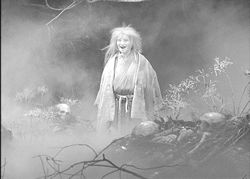
As the internet gives me the power to say whatever I want to from the virtual rooftops, I’m going to share with you something that’s been on my mind for a while. In watching a hundred years worth of foreign and arthouse cinema, you tend to notice who has talent and who doesn’t. And as a disciple and scholar on the subject of Zombies I also tend to notice when someone should have taken a break from being gorgeous and tried scaring their audience. So, I went to my ledger and found some people who, I believe could have made some truly terrifying films if they had set their minds (and wallets) to it. Look at all the times it’s worked in the favor of an auteur to turn to fright, even if only once. Roman Polanski started his career out with horror films and made some of the best in the 20th century (his most recent return to the genre The Ninth Gate, though velvety and intriguing, left something to be desired, and before that the last time he ever tried flat out scaring someone was with the Tenant, which I believe caused a lot more scratched scalps than wet drawers). Ingmar Bergman only made one flat-out fright picture as far as I know, the cerebral Hour Of The Wolf, which I have yet to track down in English. Masaki Kobyashi made only one horror film, the ghost story to end all ghost stories Kwaidan. Michael Powell and Georges Franju only made one horror film a piece, and if you can name them I’ll give you a dime. Both were wholly unique and stand up next to anything Eli Roth feels he needs to rub in our eyes for an hour and a half. So, here are some names to noodle next time your feeling like a hypothetical.
Akira Kurosawa – Not one you’d think of immediately, but considering the amount of freedom and respect he got while still at Toho, he could have made something spectacular. This notion came to me when I was watching The Hidden Fortress some time ago. I remember thinking during the opening scenes of the masses being slaughtered and the aftermath of the prison break, you know if he had just used the same sets, actors, props & costumes and just made a zombie movie, he’d have gone down in history. All Kurosawa’s movies flirt with darkness pretty heavily; High & Low, The Bad Sleep Well, Throne Of Blood, Kagemusha, Ran; these are all but a skip and a jump from being horror films. Each story has an arc that happens to take you down as far as he thought an audience was willing to follow him; the skag buying in High & Low, the ghost aspects of both Bad Sleep Well & Kagemusha (not to mention the outlandish dreams in the latter), the siege of the castle at the start of Ran’s second act, Throne Of Blood looks, feels, and even acts like a horror movie; the forest moving, the queen’s behavior and posture are pretty ghastly, as is Mifune’s final scene, the appearance of the ghost at the banquet. (I suppose much of it’s feel has to do with it’s source material, but I’ve seen Macbeth done much less spooky than this). Kurosawa could have done something so outlandish the world would not have known what to do with it.

Mike Leigh – Mike Leigh is no stranger to grime & ugliness. His movies all have a similar claustrophobic feel; his camera an unflinching probe into the world of England’s heinous underside, never once stopping for a breath of air. Naked could have been a horror movie if either male character had just stepped up their actions a little more brutally. Vera Drake, though admittedly not the easiest two hours you’ll ever encounter had an amazing look to it, and Leigh’s style of direction made something tremendous out of what could have been a crashing, burning failure in a less capable pair of hands. I just think about all of his movies and imagining if they had given them to Mike Newell or Richard Curtis or Adrian Lyne how badly these could have turned out. If the seething anger and passion that lingers like a hungry tiger beneath the surface of every one of Leigh’s films came to a boil, it might just make up for Topsy Turvy. His films are too calculated, too honest, too dirty to be anything but frightening.

Alfonso Cuaron – Anyone who doubts this can see two movies that prove my point exactly. The first is Children of Men, which is essentially a political horror film, or anyway it’s scarier than most mainstream horror. The second is his student film Quartet For The End Of Time. This is some disquieting, misanthropic stuff, most filmmakers won’t ever make such a film. I believe that he and cinematographer Emanuel Lubezki could follow in his peers Danny Boyle’s and Jean-Pierre Jeunet’s footsteps and make an artistic horror picture (although I’d obviously like it to be a little more Boyle and a little less Jeunet. No offense, but I’d take 28 Days Later over Alien: Resurrection any day). I mention Jeunet simply because his one horror picture would have been completely unwatchable were it not for the fact that Jeunet directed it (blame the script). Cuaron has an equally distinct style and if he could take the stunning visuals from Little Princess or Y Tu Mama Tambien or even Harry Potter 3, for crying out loud, and make like del toro and conjur up a ghost film or a real-apocalypse film (as opposed to the mid-apocalypse he's already covered), the man could die a legend.

As the internet gives me the power to say whatever I want to from the virtual rooftops, I’m going to share with you something that’s been on my mind for a while. In watching a hundred years worth of foreign and arthouse cinema, you tend to notice who has talent and who doesn’t. And as a disciple and scholar on the subject of Zombies I also tend to notice when someone should have taken a break from being gorgeous and tried scaring their audience. So, I went to my ledger and found some people who, I believe could have made some truly terrifying films if they had set their minds (and wallets) to it. Look at all the times it’s worked in the favor of an auteur to turn to fright, even if only once. Roman Polanski started his career out with horror films and made some of the best in the 20th century (his most recent return to the genre The Ninth Gate, though velvety and intriguing, left something to be desired, and before that the last time he ever tried flat out scaring someone was with the Tenant, which I believe caused a lot more scratched scalps than wet drawers). Ingmar Bergman only made one flat-out fright picture as far as I know, the cerebral Hour Of The Wolf, which I have yet to track down in English. Masaki Kobyashi made only one horror film, the ghost story to end all ghost stories Kwaidan. Michael Powell and Georges Franju only made one horror film a piece, and if you can name them I’ll give you a dime. Both were wholly unique and stand up next to anything Eli Roth feels he needs to rub in our eyes for an hour and a half. So, here are some names to noodle next time your feeling like a hypothetical.
Akira Kurosawa – Not one you’d think of immediately, but considering the amount of freedom and respect he got while still at Toho, he could have made something spectacular. This notion came to me when I was watching The Hidden Fortress some time ago. I remember thinking during the opening scenes of the masses being slaughtered and the aftermath of the prison break, you know if he had just used the same sets, actors, props & costumes and just made a zombie movie, he’d have gone down in history. All Kurosawa’s movies flirt with darkness pretty heavily; High & Low, The Bad Sleep Well, Throne Of Blood, Kagemusha, Ran; these are all but a skip and a jump from being horror films. Each story has an arc that happens to take you down as far as he thought an audience was willing to follow him; the skag buying in High & Low, the ghost aspects of both Bad Sleep Well & Kagemusha (not to mention the outlandish dreams in the latter), the siege of the castle at the start of Ran’s second act, Throne Of Blood looks, feels, and even acts like a horror movie; the forest moving, the queen’s behavior and posture are pretty ghastly, as is Mifune’s final scene, the appearance of the ghost at the banquet. (I suppose much of it’s feel has to do with it’s source material, but I’ve seen Macbeth done much less spooky than this). Kurosawa could have done something so outlandish the world would not have known what to do with it.
Mike Leigh – Mike Leigh is no stranger to grime & ugliness. His movies all have a similar claustrophobic feel; his camera an unflinching probe into the world of England’s heinous underside, never once stopping for a breath of air. Naked could have been a horror movie if either male character had just stepped up their actions a little more brutally. Vera Drake, though admittedly not the easiest two hours you’ll ever encounter had an amazing look to it, and Leigh’s style of direction made something tremendous out of what could have been a crashing, burning failure in a less capable pair of hands. I just think about all of his movies and imagining if they had given them to Mike Newell or Richard Curtis or Adrian Lyne how badly these could have turned out. If the seething anger and passion that lingers like a hungry tiger beneath the surface of every one of Leigh’s films came to a boil, it might just make up for Topsy Turvy. His films are too calculated, too honest, too dirty to be anything but frightening.
Alfonso Cuaron – Anyone who doubts this can see two movies that prove my point exactly. The first is Children of Men, which is essentially a political horror film, or anyway it’s scarier than most mainstream horror. The second is his student film Quartet For The End Of Time. This is some disquieting, misanthropic stuff, most filmmakers won’t ever make such a film. I believe that he and cinematographer Emanuel Lubezki could follow in his peers Danny Boyle’s and Jean-Pierre Jeunet’s footsteps and make an artistic horror picture (although I’d obviously like it to be a little more Boyle and a little less Jeunet. No offense, but I’d take 28 Days Later over Alien: Resurrection any day). I mention Jeunet simply because his one horror picture would have been completely unwatchable were it not for the fact that Jeunet directed it (blame the script). Cuaron has an equally distinct style and if he could take the stunning visuals from Little Princess or Y Tu Mama Tambien or even Harry Potter 3, for crying out loud, and make like del toro and conjur up a ghost film or a real-apocalypse film (as opposed to the mid-apocalypse he's already covered), the man could die a legend.
Friday, November 23, 2007
Japanese Screams Volume 4
And now friends we come to what may be the last in this series (at least until next Halloween) of horror movies from the land of the rising sun. This time we have a truly cruel look at society through the eyes of someone whose eyes are the only thing left intact on his face. It features a performance from one of my favorite actors of all time and it has a great look, one that rivals all 60s freak-outs (and it helps that it's done with a straight-face and doesn't once mention drugs or hippies).
The Face Of Another
by Hiroshi Teshigahara
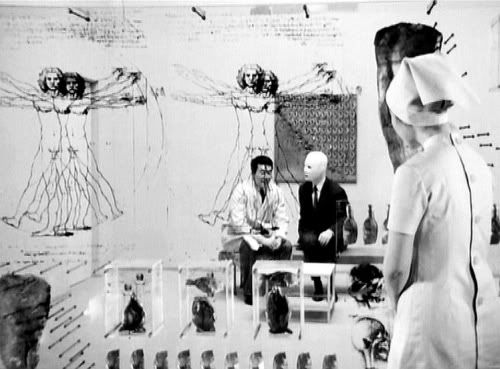 This film owes a significant debt to another black-and-white psychological horror film; Georges Franju’s The Face Of Another. Those of you who’ve seen it should know then the subject matter dealt with in Hiroshi Teshigahara’s artistic tale of loss and alienation causing the mind to turn stale is not exactly groundbreaking, but it was still effective, especially in the context of post-war Japan. The story, based on a novel by Kobo Abe, someone director Teshigahara had an informal partnership with for the first ten years of his career, follows two people affected by cosmetic disorder. The first, a man called Okuyama (a particularly crazy Tatsuya Nakadai) has been disfigured by an industrial accident and now has a bandage covering his entire face (the implication seems to be that it is permanent). The second, far less developed story follows a woman with a radiation burn on one half of her otherwise beautiful face. These stories, in case you couldn’t tell, are really about Hiroshima and the loss of identity that followed. Okuyama, who we will primarily concern ourselves with is one sick dude. He purposely bugs his wife because he knows that he repulses her and makes a point of unnerving everyone he comes in contact with (talk about self-pity). The answer to his problems (or the beginning, depending on how you look at it) comes when he meets a nameless psychologist who moonlights as a plastic surgeon. Together they come up with a plan – mold a mask for Okuyama out of someone else’s likeness and give the scarred man a new face. Now the psychiatrist, understands just how dangerous such a procedure is (“it’s like a drug that turns you invisible”) and knows Okuyama is probably going to do some truly ghastly things with his new face, but he’s too tittilated by the prospect of studying him to say no. So, against his and his nurse/mistress’ better judgment, they craft a face for Okuyama, and unsurprisingly Okuyama becomes unrecognizable, physically and mentally, to everyone with two exceptions: the mentally handicapped daughter of a hotel manager and someone I won’t mention, as it would ruin the film for you. I will say this, both act as Okuyama’s undoing as the real reason he decided to adopt the new visage was to try and seduce his wife to teach her a lesson, but that doesn’t exactly pan out. The second story, of the girl with the hideous burn on her face could be in any Italian modernist film of the 1960s in its minimalist intensity. She moves from location to location, experience-varying degrees of mistreatment, deciding ultimately that she was not meant for the world – such a world where a war could start at any moment. It isn’t exactly linear logic, but it uses pretty effective imagery.
This is the least scary and most meditative of all the films reviewed here (and Kwaidan is pretty meditative), but that’s because it was the only one made by a card carrying new waver. Hiroshi Teshigahara made precious few films in his lifetime, but those that he did were designed to burn bridges and break hearts. The Face of Another or Tanin No Gao has very few scares in it – and the ones in there mostly derive from just how upsetting it is to see Okuyama probing the depths of personal space. The strange shape of his bandaged head makes every movement a nerve wracking one. This film is incredibly interesting because of the bizarre mixture of elements and influences – The similarities between Okuyama’s appearance and that of The Invisible Man, The bizarre design of the plastic surgeon’s office (which really has to be seen, it’s amazing), the appearance of projected images on doors and windows, the nod to Chris Marker’s La Jetee at the end of the girl’s story, the symmetry that exists between Okuyama’s life and that of his new face, the very perplexing issues brought up by the surgeon as he watches someone with no redeeming qualities live with no boundaries and the extent to which he is willing to help in order to live vicariously through Okuyama – it really is a provocative film. The design and cinematography and execution are pure 60s art house, but the subject matter and imagery are of another school altogether, one I’m not sure I can place. The film’s main purpose is to show just dark it gets inside the soul when the thing that everyone sees, the face, is purposely ignored. Take that humanity!
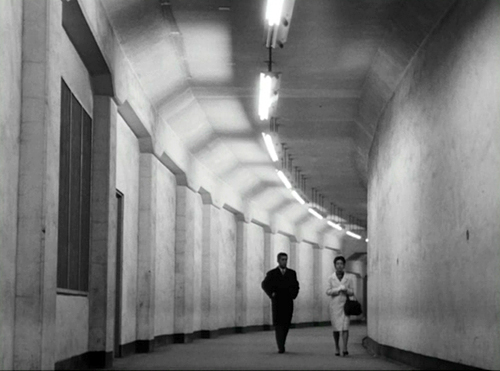 I’d like to take a moment to discuss Tatsuya Nakadai, the star of half of the above entries. As this movie has an operation that significantly changes the psyche of its main character, discussion of a mad scientist is inevitable. The surgeon in this movie however is not him. No, the mad scientist behavior belongs to Okuyama, who only lacks any real scientific knowledge. His mannerisms, inflection, behavior and logic all seem to belong to Dr. Frankenstein or Pretorius or some such mad genius. Nakadai was about as versatile an actor as you could find in the 60s and doesn’t get nearly the credit he deserves (not that a mention on a blog concerned with Zombie movies is going to give it to him). It’s because Nakadai was such a strong actor that his character far outweighs everyone around him and even though he is an unsympathetic bastard, you can’t help but wish him to succeed. Nadakai’s first real acting job came in Kobayashi’s aforementioned Human Condition trilogy, extraordinary films that don’t feel their length. Many have heralded them as the best films ever made and they certainly deserve all the praise they receive (any film with pacing decent enough to make 9 hours seem justifiable deserves all the acclaim it can get). There are two exceptional things about these movies. The first is that they are not, like Musashi Miyamoto or most other Japanese epics, based on a sprawling prose-filled novel, they’re based (loosely) on Kobayashi’s life. Second is that he is such an eloquent and skilled storyteller. The second goes a long way toward explaining the absolutely gorgeous Kwaidan. The other thing that makes these films remarkable is that they are carried by Tatsuya Nakadai, who not four years ago had been an extra in Seven Samurai. It takes real talent to move up that quickly in the film world, and Nakadai could have built a house with his. Watch him in his two early Okamoto films the Sword Of Doom and Kill! He goes from being the very definition of evil to perfectly deadpanning his funniest role in a satire of the samurai films that have made him a star.
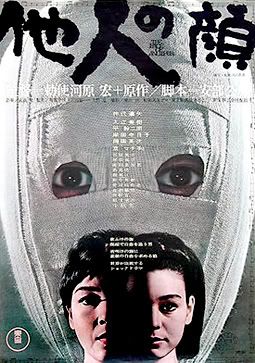
The Face Of Another
by Hiroshi Teshigahara
This film owes a significant debt to another black-and-white psychological horror film; Georges Franju’s The Face Of Another. Those of you who’ve seen it should know then the subject matter dealt with in Hiroshi Teshigahara’s artistic tale of loss and alienation causing the mind to turn stale is not exactly groundbreaking, but it was still effective, especially in the context of post-war Japan. The story, based on a novel by Kobo Abe, someone director Teshigahara had an informal partnership with for the first ten years of his career, follows two people affected by cosmetic disorder. The first, a man called Okuyama (a particularly crazy Tatsuya Nakadai) has been disfigured by an industrial accident and now has a bandage covering his entire face (the implication seems to be that it is permanent). The second, far less developed story follows a woman with a radiation burn on one half of her otherwise beautiful face. These stories, in case you couldn’t tell, are really about Hiroshima and the loss of identity that followed. Okuyama, who we will primarily concern ourselves with is one sick dude. He purposely bugs his wife because he knows that he repulses her and makes a point of unnerving everyone he comes in contact with (talk about self-pity). The answer to his problems (or the beginning, depending on how you look at it) comes when he meets a nameless psychologist who moonlights as a plastic surgeon. Together they come up with a plan – mold a mask for Okuyama out of someone else’s likeness and give the scarred man a new face. Now the psychiatrist, understands just how dangerous such a procedure is (“it’s like a drug that turns you invisible”) and knows Okuyama is probably going to do some truly ghastly things with his new face, but he’s too tittilated by the prospect of studying him to say no. So, against his and his nurse/mistress’ better judgment, they craft a face for Okuyama, and unsurprisingly Okuyama becomes unrecognizable, physically and mentally, to everyone with two exceptions: the mentally handicapped daughter of a hotel manager and someone I won’t mention, as it would ruin the film for you. I will say this, both act as Okuyama’s undoing as the real reason he decided to adopt the new visage was to try and seduce his wife to teach her a lesson, but that doesn’t exactly pan out. The second story, of the girl with the hideous burn on her face could be in any Italian modernist film of the 1960s in its minimalist intensity. She moves from location to location, experience-varying degrees of mistreatment, deciding ultimately that she was not meant for the world – such a world where a war could start at any moment. It isn’t exactly linear logic, but it uses pretty effective imagery. This is the least scary and most meditative of all the films reviewed here (and Kwaidan is pretty meditative), but that’s because it was the only one made by a card carrying new waver. Hiroshi Teshigahara made precious few films in his lifetime, but those that he did were designed to burn bridges and break hearts. The Face of Another or Tanin No Gao has very few scares in it – and the ones in there mostly derive from just how upsetting it is to see Okuyama probing the depths of personal space. The strange shape of his bandaged head makes every movement a nerve wracking one. This film is incredibly interesting because of the bizarre mixture of elements and influences – The similarities between Okuyama’s appearance and that of The Invisible Man, The bizarre design of the plastic surgeon’s office (which really has to be seen, it’s amazing), the appearance of projected images on doors and windows, the nod to Chris Marker’s La Jetee at the end of the girl’s story, the symmetry that exists between Okuyama’s life and that of his new face, the very perplexing issues brought up by the surgeon as he watches someone with no redeeming qualities live with no boundaries and the extent to which he is willing to help in order to live vicariously through Okuyama – it really is a provocative film. The design and cinematography and execution are pure 60s art house, but the subject matter and imagery are of another school altogether, one I’m not sure I can place. The film’s main purpose is to show just dark it gets inside the soul when the thing that everyone sees, the face, is purposely ignored. Take that humanity!
I’d like to take a moment to discuss Tatsuya Nakadai, the star of half of the above entries. As this movie has an operation that significantly changes the psyche of its main character, discussion of a mad scientist is inevitable. The surgeon in this movie however is not him. No, the mad scientist behavior belongs to Okuyama, who only lacks any real scientific knowledge. His mannerisms, inflection, behavior and logic all seem to belong to Dr. Frankenstein or Pretorius or some such mad genius. Nakadai was about as versatile an actor as you could find in the 60s and doesn’t get nearly the credit he deserves (not that a mention on a blog concerned with Zombie movies is going to give it to him). It’s because Nakadai was such a strong actor that his character far outweighs everyone around him and even though he is an unsympathetic bastard, you can’t help but wish him to succeed. Nadakai’s first real acting job came in Kobayashi’s aforementioned Human Condition trilogy, extraordinary films that don’t feel their length. Many have heralded them as the best films ever made and they certainly deserve all the praise they receive (any film with pacing decent enough to make 9 hours seem justifiable deserves all the acclaim it can get). There are two exceptional things about these movies. The first is that they are not, like Musashi Miyamoto or most other Japanese epics, based on a sprawling prose-filled novel, they’re based (loosely) on Kobayashi’s life. Second is that he is such an eloquent and skilled storyteller. The second goes a long way toward explaining the absolutely gorgeous Kwaidan. The other thing that makes these films remarkable is that they are carried by Tatsuya Nakadai, who not four years ago had been an extra in Seven Samurai. It takes real talent to move up that quickly in the film world, and Nakadai could have built a house with his. Watch him in his two early Okamoto films the Sword Of Doom and Kill! He goes from being the very definition of evil to perfectly deadpanning his funniest role in a satire of the samurai films that have made him a star. He did everything – comedy, drama, horror, sword play – nothing was too much for Nakadai, and beneath those hollow eyes was someone who could make you believe he was suffering for all of humanity or chillingly making all of humanity suffer. Though Toshiro Mifune gets most of the credit (though I surmise this has more to do with him being older and getting an early start with Rashamon and Seven Samurai. Not that he isn’t terrific…) as Japan’s leading man, I’d almost always prefer Nakadai, who with ten times the subtlety of his grumbling peer gave just as splendid a performance.
Subscribe to:
Posts (Atom)